Ruleset
Agari plays standard four-player riichi mahjong and its three-player variation, Sanma. This is the full four-player ruleset: yaku, scoring, fu, calls, and how a match runs from the first hand to game end. Sanma's differences are in Sanma at the end.
Match
- FormatTonpuusen / Hanchan · 4p (Sanma: 3p)
- Starting points25,000
- Goal (return)30,000
- Uma20 / 10 / −10 / −20
- Oka20,000 1st
Tiles & dora
- Red fives3 (default)
- Ura doraOn
- Kan doraOn
- Flowers / seasonsOff
Calls & winning
- Kuitan (open tanyao)On
- AtozukeOn
- Kuikae (swap call)Off
- Furiten riichiOn
- Double / triple ronOn
Scoring
- Kiriage manganOff
- Kazoe yakumanOn
- Double yakumanOn
- Nagashi manganOn
- Pao (liability)On
Game end
- Tobi (bust ends game)On
- Enchōsen (overtime)Sudden death
- AgariyameOn
- TenpaiyameOn
- Abortive drawsOn
Match Format
Agari offers two match types: tonpuusen (East only), a single East round, and hanchan, an East round followed by a South round. Both are four players, no flowers or seasons; the three-player table is in Sanma. Everything below applies to both lengths unless noted.
| Setting | Value |
|---|---|
| Players | 4 (yonma); 3 in Sanma |
| Rounds | East only (tonpuusen) · East + South (hanchan) |
| Starting score | 25,000 points |
| Goal / return score | 30,000 points |
| Uma (placement bonus) | +20,000 / +10,000 / −10,000 / −20,000 |
| Oka | 20,000 points, awarded to 1st place at game end |
Uma, oka, and leftover riichi-stick redistribution apply to ranked tonpuusen and hanchan matches. The Daily Wall single-hand mode uses raw end-of-hand scores instead, with no placement bonuses and no stick redistribution.
Tiles
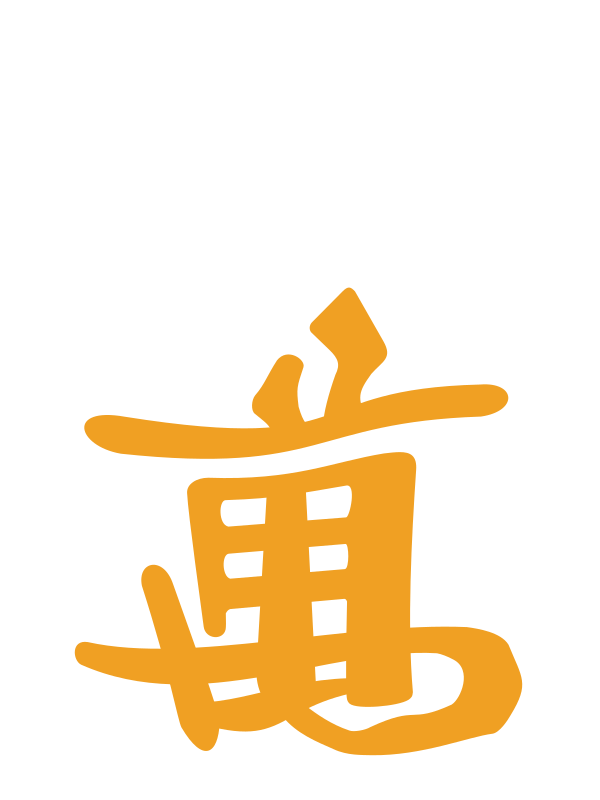
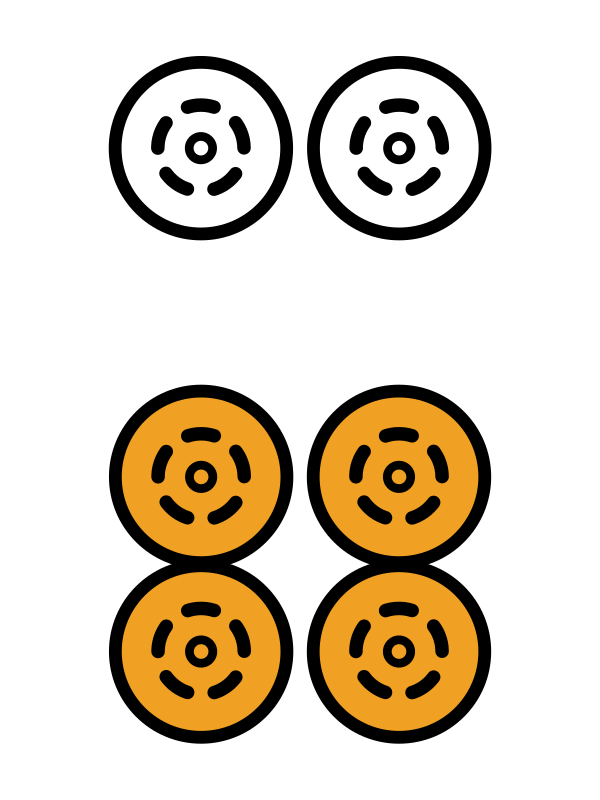
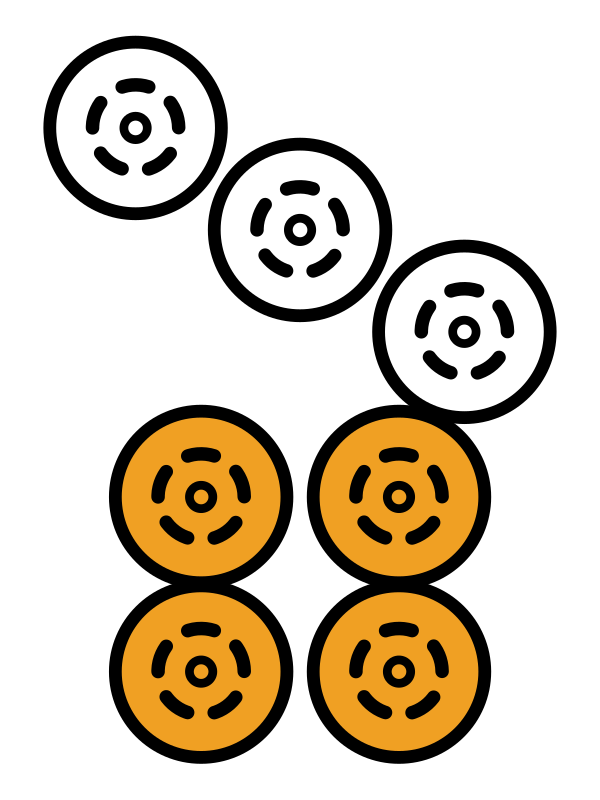
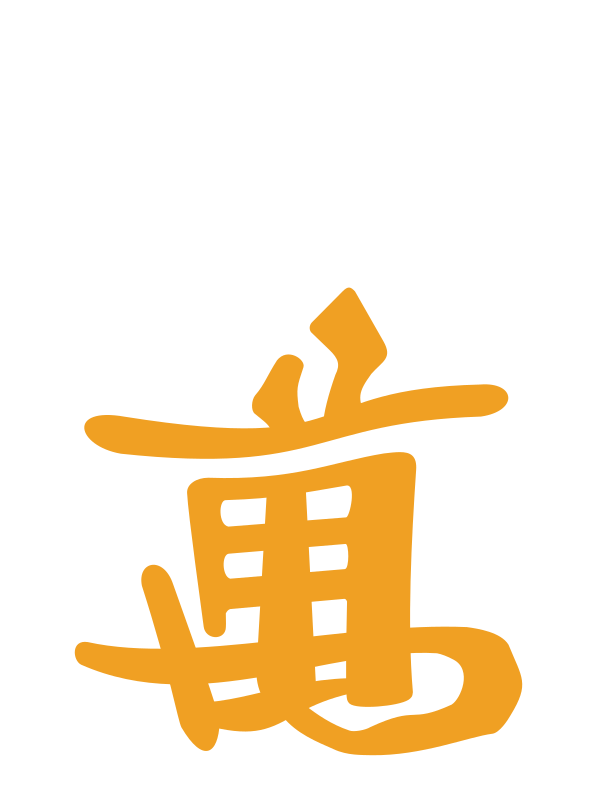
Agari uses the standard 136-tile riichi set: 34 distinct tiles, four of each. There are three number suits: manzu (萬子, characters), pinzu (筒子, circles), and souzu (索子, bamboo), plus the four winds and the three dragons.
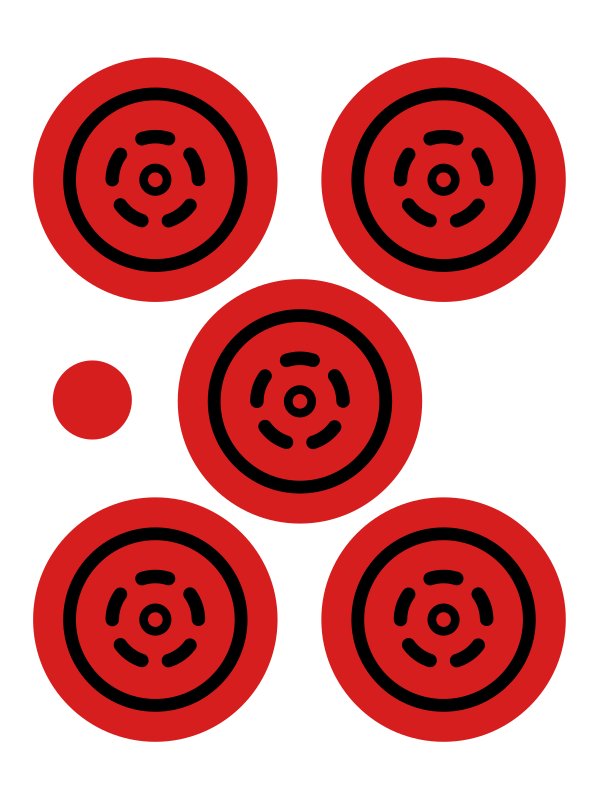
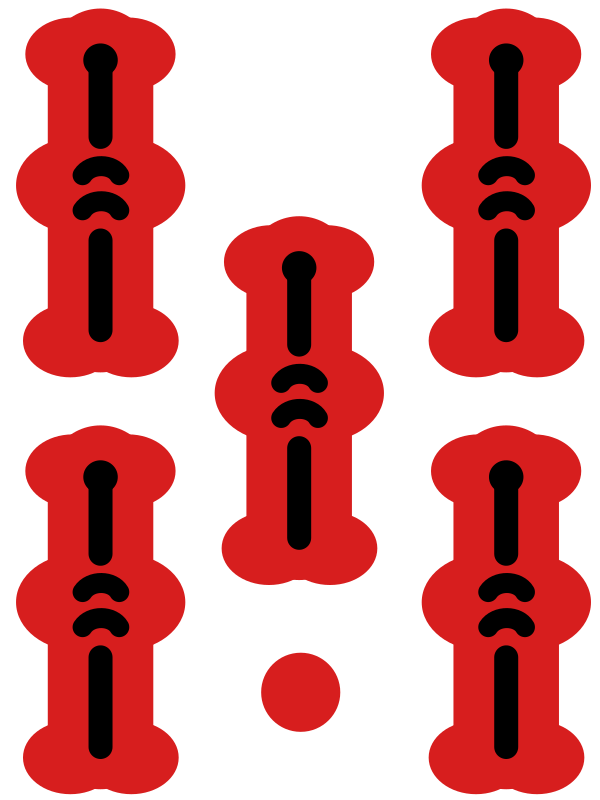
Some of the regular fives are replaced by red fives (akadora), and each one in a winning hand counts as an extra dora. The number of red fives is configurable: none, 3 (one per suit), or 4 (one per suit plus a second red five of pinzu). Agari defaults to 3.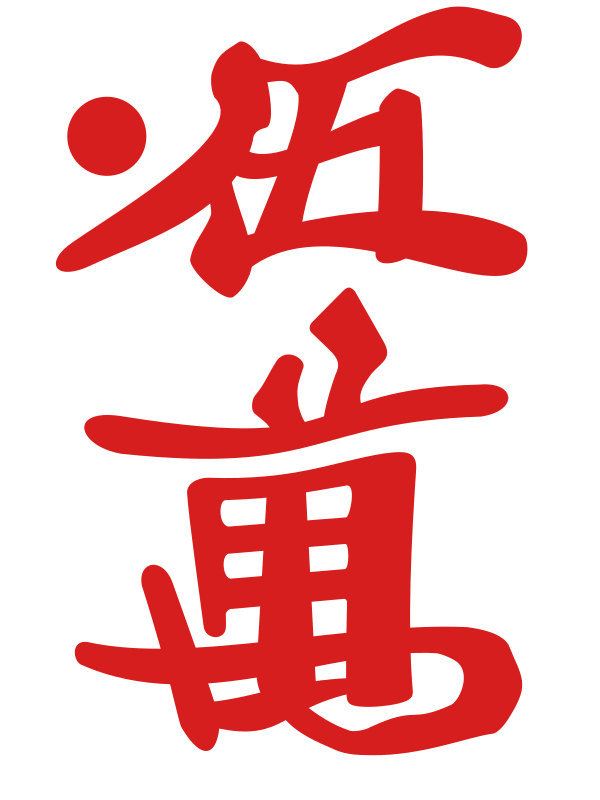
Winning a Hand
A hand wins (an agari) when all of the following are true:
- The hand is complete. The 14 tiles (your 13 plus the winning tile) form one of:
- four sets plus a pair (the standard shape),
- seven distinct pairs (chiitoitsu, no duplicate pairs allowed), or
- kokushi musou (thirteen orphans): one of each terminal and honour, plus a duplicate of any one of them.
- The hand has at least one yaku. Dora are not a yaku and never let a hand win on their own.
- You are not in furiten (see Furiten). A furiten hand can still win by tsumo (self-draw).
- Atozuke is allowed. The yaku only needs to be present at the moment you win; you may win on the very tile that grants it.
Yaku
Every winning hand needs at least one yaku. Values below are shown as closed / open han; an means the yaku is only possible with a closed hand.
Standard yaku
| Yaku | 日本語 | Han | Notes |
|---|---|---|---|
| Riichi | 立直 | 1 / | Declared tenpai on a closed hand; costs 1,000 points |
| Ippatsu | 一発 | 1 / | Win within one uninterrupted go-around of declaring riichi |
| Menzen Tsumo | 門前清自摸和 | 1 / | Tsumo win with a closed hand |
| Tanyao | 断么九 | 1 / 1 | No terminals or honours; all tiles 2 to 8 |
| Pinfu | 平和 | 1 / | All sequences, a two-sided wait, a non-value pair |
| Iipeikou | 一盃口 | 1 / | Two identical sequences |
| Yakuhai (dragons) | 役牌 | 1 / 1 | A triplet of haku, hatsu, or chun |
| Yakuhai (round wind) | 場風 | 1 / 1 | A triplet of the round wind |
| Yakuhai (seat wind) | 門風 | 1 / 1 | A triplet of your seat wind |
| Sanshoku Doujun | 三色同順 | 2 / 1 | The same sequence in all three suits |
| Ittsu | 一気通貫 | 2 / 1 | 1-2-3, 4-5-6, 7-8-9 in one suit |
| Chanta | 混全帯么九 | 2 / 1 | Every set contains a terminal or honour |
| Chiitoitsu | 七対子 | 2 / | Seven distinct pairs; always 25 fu |
| Toitoi | 対々和 | 2 / 2 | All triplets and quads |
| Sanankou | 三暗刻 | 2 / 2 | Three concealed triplets |
| Sanshoku Doukou | 三色同刻 | 2 / 2 | The same triplet in all three suits |
| Sankantsu | 三槓子 | 2 / 2 | Three quads |
| Honroutou | 混老頭 | 2 / 2 | All terminals and honours (always combines with toitoi or chiitoitsu) |
| Shousangen | 小三元 | 2 / 2 | Two dragon triplets/quads plus a pair of the third dragon |
| Honitsu | 混一色 | 3 / 2 | One suit plus honours |
| Junchan | 純全帯么九 | 3 / 2 | Every set contains a terminal; no honours |
| Ryanpeikou | 二盃口 | 3 / | Two separate pairs of identical sequences |
| Chinitsu | 清一色 | 6 / 5 | A single suit, no honours |
Situational yaku
These depend on how or when you win rather than the hand's shape.
| Yaku | 日本語 | Han | Notes |
|---|---|---|---|
| Double Riichi | 両立直 | 2 / | Riichi declared on your first uninterrupted discard |
| Haitei Raoyue | 海底撈月 | 1 / 1 | Tsumo on the very last tile of the wall |
| Houtei Raoyui | 河底撈魚 | 1 / 1 | Ron on the final discard of the hand |
| Rinshan Kaihou | 嶺上開花 | 1 / 1 | Tsumo on the replacement tile after a kan |
| Chankan | 槍槓 | 1 / 1 | Ron on the tile an opponent adds to an open triplet |
| Nagashi Mangan | 流し満貫 | Mangan | At an exhaustive draw, all your discards are terminals/honours and none were called |
Yakuman
Yakuman are the limit hands. They stack additively with no cap: a hand that qualifies for more than one is worth their combined total, and each hand marked double yakuman below counts as two. (For example, a hand that is both all honours and all four winds scores tsuuiisou + daisuushii together.) A counted yakuman (kazoe, from 13+ han) always counts as a single yakuman.
| Yaku | 日本語 | Notes |
|---|---|---|
| Kokushi Musou | 国士無双 | Thirteen orphans: one of each terminal/honour plus a duplicate |
| Kokushi 13-wait | 国士無双十三面待ち | Waiting on all thirteen. Double yakuman. |
| Suuankou | 四暗刻 | Four concealed triplets |
| Suuankou Tanki | 四暗刻単騎 | Four concealed triplets won on a single-tile pair wait. Double yakuman. |
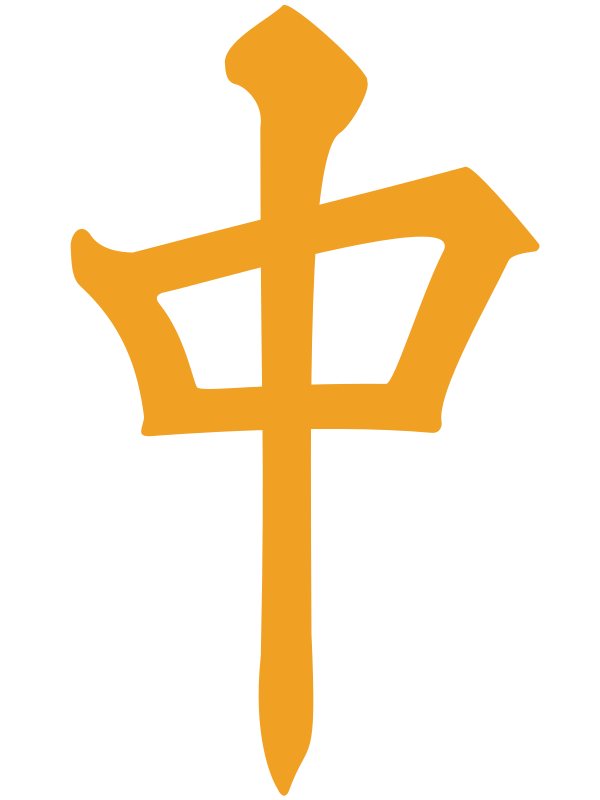
| Daisangen | 大三元 | All three dragon triplets |
| Shousuushii | 小四喜 | Three wind triplets plus a wind pair |
| Daisuushii | 大四喜 | All four wind triplets. Double yakuman. |
| Tsuuiisou | 字一色 | All honour tiles |
| Chinroutou | 清老頭 | All terminals |
| Ryuuiisou | 緑一色 | All green tiles (2s, 3s, 4s, 6s, 8s, hatsu) |
| Chuuren Poutou | 九蓮宝燈 | The nine gates: 1112345678999 + one same-suit tile |
| Junsei Chuuren | 純正九蓮宝燈 | The pure nine-sided nine-gates wait. Double yakuman. |
| Suukantsu | 四槓子 | Four quads |
| Tenhou | 天和 | Dealer (oya 親) wins on the dealt hand |
| Chiihou | 地和 | Non-dealer (ko 子) wins by tsumo on the first draw, before anyone has called or declared a kan |
| Kazoe Yakuman | 数え役満 | Any hand reaching 13+ han counts as a yakuman |

Dora
Dora add han to a winning hand but are not a yaku. They can't win a hand on their own.
| Type | Rule |
|---|---|
| Dora (omote) | The tile after the face-up indicator is dora; revealed at the start of the hand |
| Kan dora | A new indicator flips for each kan |
| Ura dora | Revealed only for riichi winners, under the dora indicators |
| Kan ura dora | The ura tile beneath each kan indicator; also for riichi winners |
| Red fives | Each red five in the hand counts as +1 dora |
Indicators cycle: numbers 1 2 ... 9 1, winds E S W N E, dragons haku hatsu chun haku.
Scoring
A win's value comes from its han (from yaku and dora) and its fu (see Fu). Common payments are below; the named limit hands take over for larger hands.
| Han / fu | Non-dealer ron | Non-dealer tsumo (ea. / dealer) | Dealer ron | Dealer tsumo (ea.) |
|---|---|---|---|---|
| 1 han 30 fu | 1,000 | 300 / 500 | 1,500 | 500 |
| 2 han 30 fu | 2,000 | 500 / 1,000 | 3,900 | 1,000 |
| 3 han 30 fu | 3,900 | 1,000 / 2,000 | 7,700 | 2,000 |
| 4 han 30 fu | 7,700 | 2,000 / 3,900 | 11,600 | 3,900 |
| Mangan | 8,000 | 2,000 / 4,000 | 12,000 | 4,000 |
| Haneman | 12,000 | 3,000 / 6,000 | 18,000 | 6,000 |
| Baiman | 16,000 | 4,000 / 8,000 | 24,000 | 8,000 |
| Sanbaiman | 24,000 | 6,000 / 12,000 | 36,000 | 12,000 |
| Yakuman | 32,000 | 8,000 / 16,000 | 48,000 | 16,000 |
| Double Yakuman | 64,000 | 16,000 / 32,000 | 96,000 | 32,000 |
A hand reaches mangan at 5+ han, or 4 han 40+ fu, or 3 han 70+ fu. Kiriage mangan is off, so a 4 han 30 fu hand pays 7,700 / 11,600 rather than a rounded-up mangan. Triple and quadruple yakuman continue the pattern: N times the single-yakuman value.
Honba (bonus counter)
Each honba adds +300 to the winning payment: +100 from each player on a tsumo, or +300 from the discarder on a ron. The counter goes up whenever the dealer wins and on any draw (exhaustive or abortive), and resets to zero when a non-dealer wins.
Riichi bets
Your 1,000-point riichi bet goes on the table once your riichi tile passes without a ron. The winner of the hand collects every riichi stick on the table. If the hand ends in a draw, exhaustive or abortive, the sticks carry over to the next hand. Any sticks left on the table at game end go to first place.
If an opponent rons your riichi tile (the discard you declared on), the riichi never takes effect: your bet is never placed, and the winner only takes sticks that were already on the table.
Fu
Every hand starts at 20 fu, then adds the values below. The total is rounded up to the nearest 10.
| Source | Fu |
|---|---|
| Closed ron (menzen bonus) | +10 |
| Tsumo (except pinfu) | +2 |
| Open triplet (simples) | 2 |
| Closed triplet (simples) | 4 |
| Open triplet (terminals/honours) | 4 |
| Closed triplet (terminals/honours) | 8 |
| Open quad (simples) | 8 |
| Closed quad (simples) | 16 |
| Open quad (terminals/honours) | 16 |
| Closed quad (terminals/honours) | 32 |
| Yakuhai pair (dragon / round wind / seat wind) | 2 |
| Double-wind pair (round = seat) | 4 |
| Wait: kanchan (closed), penchan (edge), or tanki (pair) | +2 |
Sequences, simple pairs, and two-sided (ryanmen) or dual-pair (shanpon) waits add no fu. Three special cases:
- Chiitoitsu is always 25 fu.
- Pinfu by tsumo is always 20 fu.
- Pinfu by ron is 30 fu (20 plus the closed-ron bonus).
Furiten
A player in furiten cannot win by ron, only by tsumo. There are three ways to be in furiten:
| State | Trigger | Clears when |
|---|---|---|
| Discard | One of your winning tiles sits in your own discards | Your wait changes (impossible after riichi) |
| Temporary | You passed on a winning discard this go-around | Your next discard, whether you reach it by drawing or by calling |
| Riichi furiten | You pass on any winning discard after declaring riichi | Never. Tsumo only for the rest of the hand |
Furiten is based on your wait shape, not yaku: any tile that completes your hand triggers furiten (even one that would give you no yaku and couldn't be won on).
Calls
| Call | Rule |
|---|---|
| Chi | Sequence from the player to your left only |
| Pon | Triplet from any player's discard |
| Kan (open) | A fourth tile claimed from any player's discard |
| Kan (added) | A fourth tile added to your own open triplet |
| Kan (closed) | Four of a kind from your own hand; the hand stays closed |
| Kuikae | Off. You can't call a tile and then discard that same tile (or its sequence equivalent) |
Double ron is on: two players can win on the same discard, and each scores their hand independently. (Triple ron is also a win; see Abortive Draws.) When more than one player rons, the riichi sticks and the honba bonus go to the winner closest to the discarder in turn order.
After a chi or pon you must discard to continue. You can't declare a tsumo or a kan off a hand that happens to be complete after a call; those need an actual draw from the wall.
Riichi
To declare riichi your hand must be closed and in tenpai. You discard sideways, and your 1,000-point bet goes on the table once that tile passes without a ron. After that the hand is locked: you discard each tile as you draw it.
- Ankan after riichi is allowed only if it doesn't change your wait.
- Furiten riichi is allowed. You may declare even while in furiten, but you can then only win by tsumo.
- Winning within one uninterrupted go-around of declaring scores ippatsu; any call in between cancels it.
Kan
- At most four kans per hand across all players; a fifth is never offered. When the four kans belong to more than one player, the hand aborts (suukaikan) once the fourth kan's discard passes without a ron. Four kans by one player play on toward suukantsu.
- Each kan draws a replacement tile from the dead wall and flips a new dora indicator.
- Dora flip timing: a closed kan flips its indicator immediately; an open or added kan flips after the discard.
- A replacement-tile win scores rinshan kaihou.
- Opponents may ron the tile used for an added kan (chankan). A hand in kokushi tenpai may also rob a closed kan; no other hand can.
Exhaustive Draw
If the wall runs out with no winner, players reveal whether they're in tenpai. Noten players pay 3,000 points total, split among the tenpai players:
| Tenpai players | Each tenpai receives | Each noten pays |
|---|---|---|
| 1 | 3,000 | 1,000 |
| 2 | 1,500 | 1,500 |
| 3 | 1,000 | 3,000 |
| 0 or 4 | none | none |
The dealer repeats if tenpai, and otherwise the seats rotate; the honba counter goes up either way. If a player meets the nagashi mangan conditions (all their discards are terminals/honours, none called), that pays out as a mangan tsumo instead of the tenpai exchange. It is still a draw: the payment carries no honba bonus, the riichi sticks stay on the table, and the dealer repeats only if tenpai.
Abortive Draws
Some situations end the hand immediately with no score change. The dealer repeats, so the next hand keeps the same name (East 1 again), with a fresh wall and one more honba.
| Condition | Name |
|---|---|
| A player holds 9+ different terminals/honours on their first uninterrupted draw and abandons | Kyuushu kyuuhai |
| All four players discard the same wind on the first go-around, no calls | Suufon renda |
| All four players declare riichi | Suucha riichi |
| Four kans are declared by more than one player | Suukaikan |
Triple ron is not an abortive draw in Agari; all three winners score their hands independently.
Game End
After the final hand (South 4 in a hanchan, East 4 in a tonpuusen, or the last extra hand), placement is decided by score. The game can also end early:
| Condition | Result |
|---|---|
| A player drops below 0 (tobi) | Game ends immediately; that player places last |
| End of the final hand with someone at 30,000+ | Normal end, ranked by score |
| End of the final hand with nobody at 30,000 | Enchōsen: sudden-death overtime, one extra wind round at most. West for a hanchan, South for a tonpuusen. |
| During enchōsen, the dealer does not repeat | The game ends as soon as any player reaches 30,000 points, including from tenpai payments at an exhaustive draw |
| During enchōsen, the dealer repeats | Play continues, unless that dealer is the one in 1st place with 30,000 or more. Another player crossing 30,000 does not end it. |
| Last hand of enchōsen (West 4 / South 4), the dealer does not repeat | The game ends, whatever the scores. |
| Agariyame | If the dealer of the final hand wins while in 1st place with 30,000 or more, the game ends. A dealer who is not 1st, or is below 30,000, must continue. |
| Tenpaiyame | If the dealer of the final hand is in 1st place with 30,000 or more and stays tenpai at an exhaustive draw, the game ends. |
Ties are broken by seating order: the seat closer to the starting dealer ranks higher.
Pao (Liability)
If a player's called tile directly completes an opponent's daisangen (third dragon triplet) or daisuushii (fourth wind triplet), that player becomes liable for the yakuman:
- On a tsumo, the liable player pays the entire yakuman alone.
- On a ron by someone else, the discarder and the liable player split the payment in half.
Sanma
Sanma is a three-player variation of Japanese riichi mahjong.
| Rule | Sanma |
|---|---|
| Tiles | 108 (2m to 8m removed) |
| Seats | East, South, West; three hands per round |
| Points | 35,000 start, 40,000 goal |
| Uma / oka | +20,000 / 0 / −20,000, 15,000 oka |
| Red fives | 2 (5p, 5s) or none |
| Chi | Not allowed |
| Tsumo | Paid by the two other players at their usual share |
| Honba | 200 (100 from each player on a tsumo) |
| Noten payments | 2,000 total |
| Abortive draws | Kyuushu kyuuhai and suukaikan only |
| Dora | A 1m indicator makes 9m dora |
Kita. On your turn, after a draw, you may set a North aside with Kita. Each pulled North (nukidora) counts as one dora, and you draw a replacement tile; a tsumo on the replacement tile scores rinshan kaihou. Like a call, Kita ends the first go-around and cancels ippatsu, but the hand stays closed. Another player may ron the pulled North (no chankan), and a player who passes on that ron is furiten. A North kept in the hand is a guest wind.