How to Play
Riichi Mahjong is a four-player game of incomplete information that rewards careful observation and risk management. The primary objective is to assemble a winning hand of fourteen tiles faster than your opponents while defending against their hidden threats. This section introduces the fundamental mechanics required to read the board and navigate the flow of a standard match in Agari.
Basics
The tiles
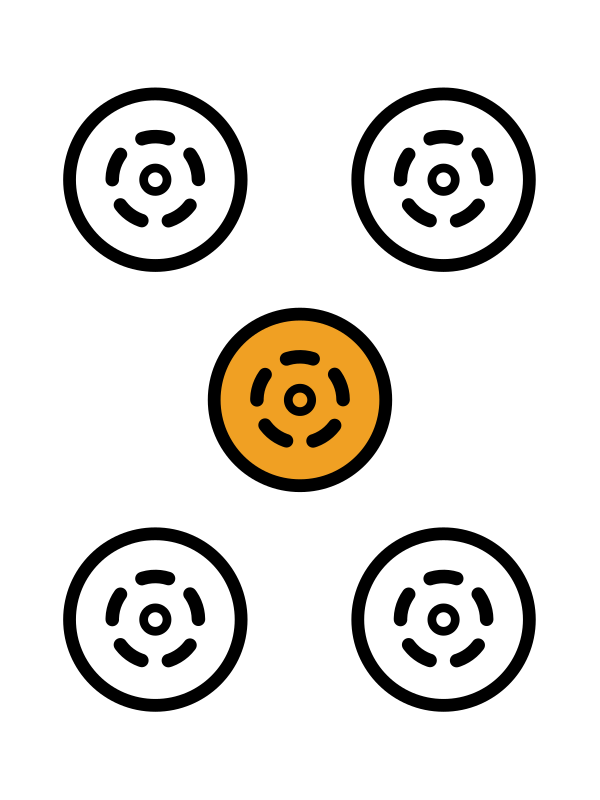
Riichi mahjong is played with 136 tiles. The three number suits (manzu, pinzu, and souzu) each run from 1 to 9, with four copies of every tile. The honors are the four winds (East, South, West, North) and the three dragons (Haku, Hatsu, and Chun), also four copies each.
The 1s and 9s of each suit are terminals. Terminals and honors together form the yaochuuhai. These tiles matter for scoring. They enable certain patterns and block others, such as tanyao, which requires a hand with no terminals or honors at all.
Winning hand structure
A valid winning hand requires exactly 14 tiles. In almost every case these tiles must be arranged into four sets and one pair. (Two rare special hands, seven pairs and thirteen orphans, are the only exceptions to this structure.)
Set definitions
A standard set consists of three tiles. A sequence of three consecutive tiles in the same suit is a shuntsu. Three identical tiles form a koutsu. Four identical tiles form a kantsu and are treated as a standard set for hand construction. The pair (toitsu) must be two identical tiles.



Turn progression
Each hand begins with the dealer, the player sitting East, who takes the first turn. Play then proceeds counter-clockwise. Players begin with 13 tiles, and on a standard turn you draw one tile from the wall and discard one tile to stay at 13. You complete your hand with a fourteenth tile that arrives either from your own draw, which is a win called tsumo, or from an opponent's discard, which is a win called ron.
The dealer's seat is special. If the dealer wins the hand, the seats do not rotate and they stay East for the next hand. This is a dealer repeat (renchan). The dealer also repeats if the hand ends in a draw and they are tenpai (one tile from winning). Otherwise the seats rotate, and the player on East's right, the next player in turn order, becomes the new dealer. Hands are named by the dealer's progress, shown on screen as East 1, East 2, and so on.
Agari offers two match lengths. A tonpuusen (East-only match) is played over a single wind round, East 1 through East 4. A hanchan, the standard length, runs through two wind rounds, East and then South, ending at South 4. Dealer repeats can extend either format with additional hands, and if no player has reached 30,000 points when the last hand ends, play continues into one extra wind round of sudden death.
Calling tiles
You may claim an opponent's discard to complete a set immediately, out of turn. There are three kinds of call.
Pon claims a discard to complete a koutsu (a triplet of identical tiles). You hold a matching pair and take the discard to make three. You can pon from any player.
Chi claims a discard to complete a shuntsu (a sequence of three consecutive tiles in the same suit), and can only be called from the player immediately to your left.
Kan completes a kantsu (four identical tiles) and can be claimed from any player. A kan can also be formed entirely from four tiles you drew yourself, which keeps your hand closed. Either way, a kan draws a replacement tile and reveals an additional dora indicator.
A set claimed from a discard is placed face-up on the table for every player to see, which opens your hand. An open hand is generally worth fewer points and cannot declare riichi.
Bonus tiles (dora)
Every hand can contain bonus tiles known as dora. One tile is turned face-up on the table as the dora indicator (in Agari it appears in the top-left corner of the screen), and the dora is always the next tile in sequence after it (9 wraps back to 1, and honors cycle within their own group). Each dora in your winning hand adds extra value, worth +1 han apiece. Dora are not a yaku, however, so a hand cannot win on dora alone. A valid yaku is always required. If a player wins after declaring riichi, additional hidden indicators are revealed, potentially unlocking ura dora (hidden bonus tiles) for an even higher score.
Some of the number-5 tiles are printed entirely in red. These are known as aka dora (red fives) and count exactly like standard dora, at +1 han each. In Agari, matches can be configured to include three red fives (one in each suit), four red fives (an additional red five of pinzu), or none at all.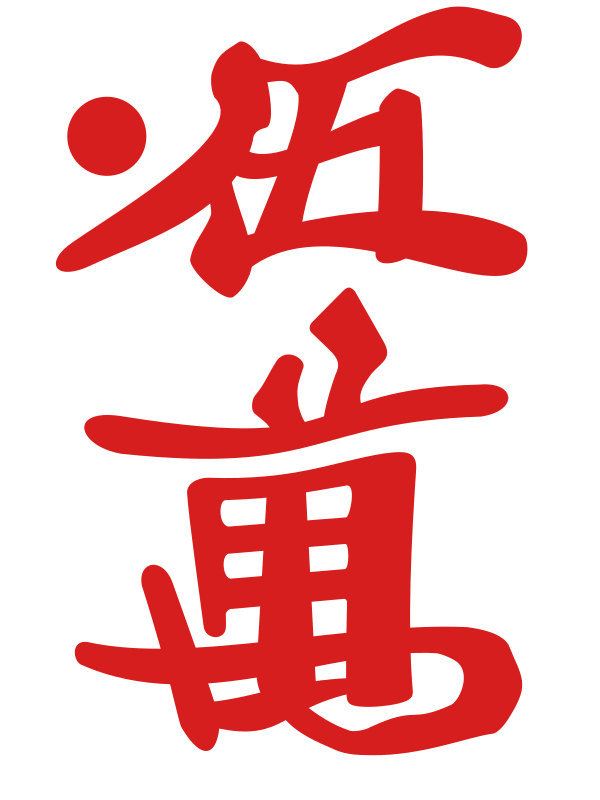


The yaku requirement
Constructing four sets and a pair is not sufficient on its own. A legal hand must contain at least one yaku (a recognized pattern that provides value). A complete hand with no yaku cannot win, whether by draw or by discard.
If your hand contains no inherent yaku, you can satisfy this requirement by keeping it completely closed and declaring riichi once you are one tile away from completing it (a state called tenpai). This declaration costs a 1,000 point deposit and locks your hand. Once locked, you must discard every tile you draw, other than a winning tile, until someone wins or the hand ends.
Below are three common beginner examples that illustrate valid yaku.
Riichi (Closed Hand Only). As it stands, this hand contains no yaku. Kept closed, the player can declare riichi to make it a winning hand. The player could instead call tiles to develop it more quickly, but doing so forfeits the riichi option, so the hand would then need to grow toward a different yaku before it could win. Calling does not by itself make a yakuless hand winnable; it simply trades the riichi route for the work of building another yaku.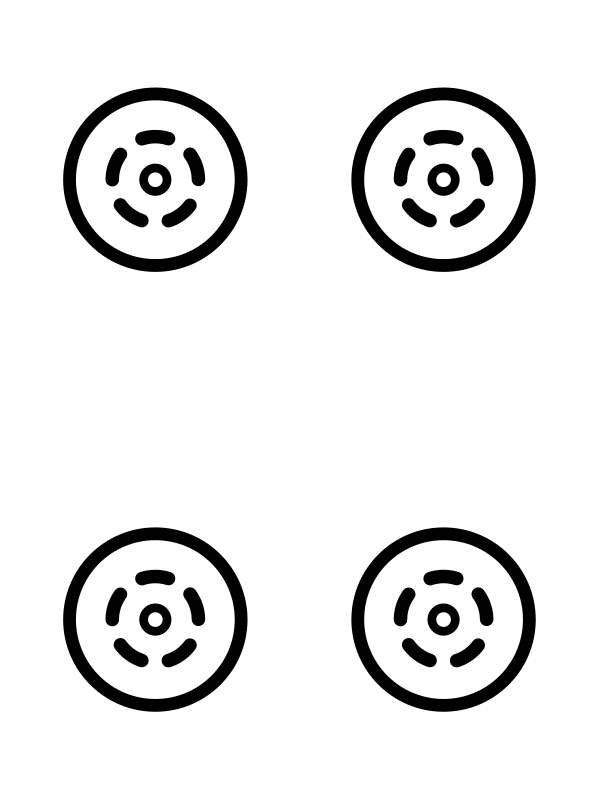
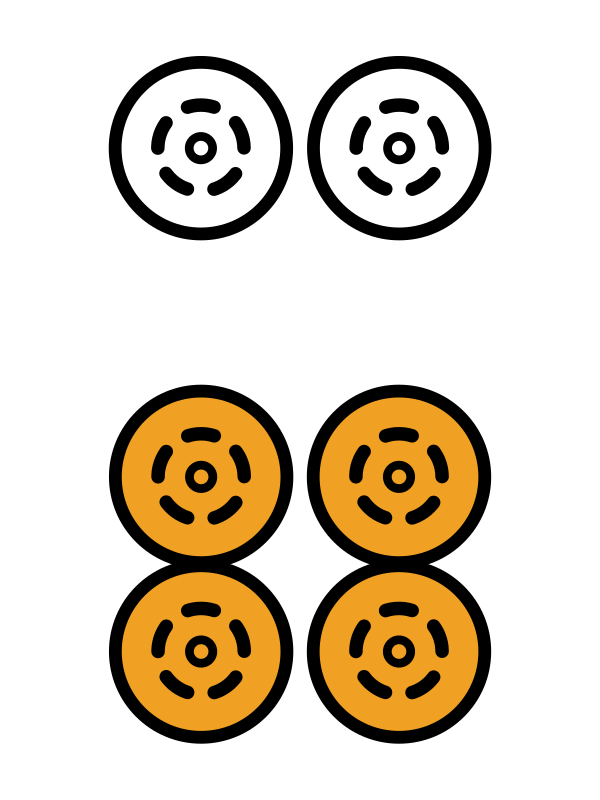

Yakuhai (Value Honors). This hand contains a koutsu (triplet) of green dragons. A triplet of any dragon is always a yaku, so this hand qualifies even while open, leaving the player free to claim discards from opponents. The same applies to a triplet of your seat wind or the round wind. A triplet of any other wind (a guest wind) provides no yaku.
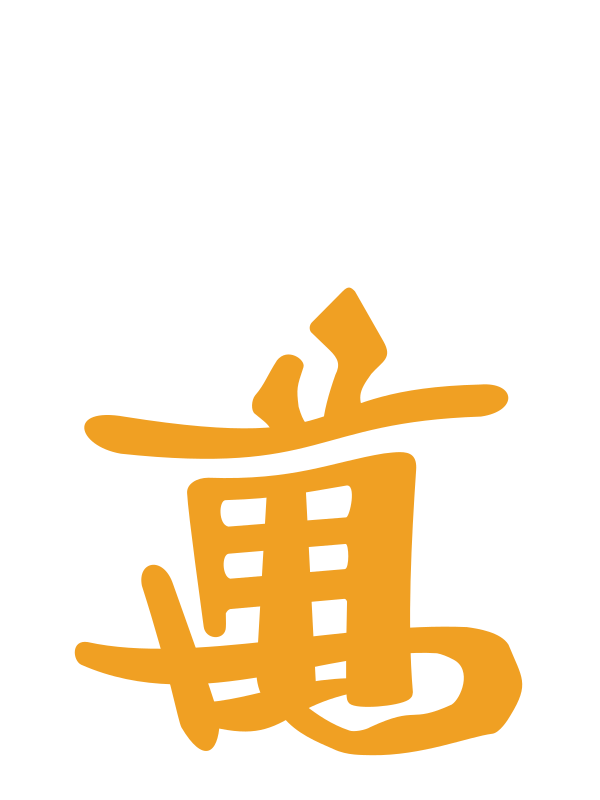
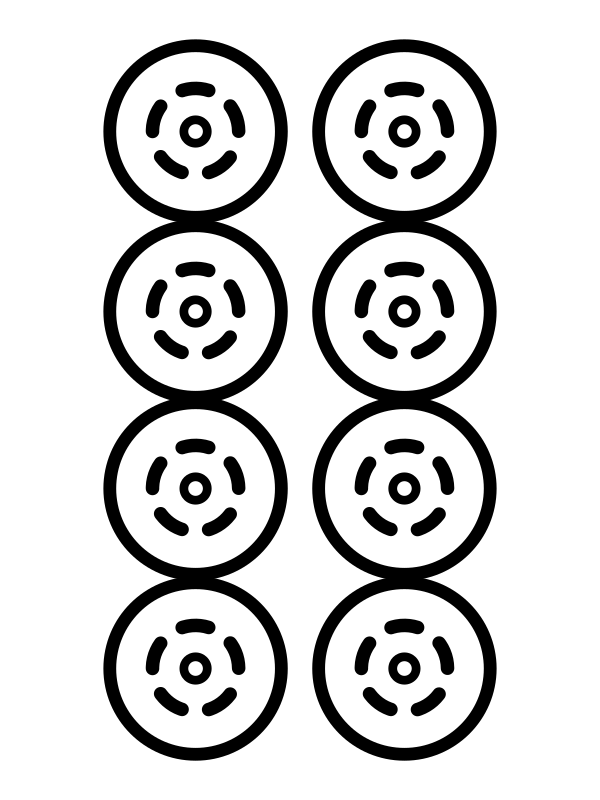


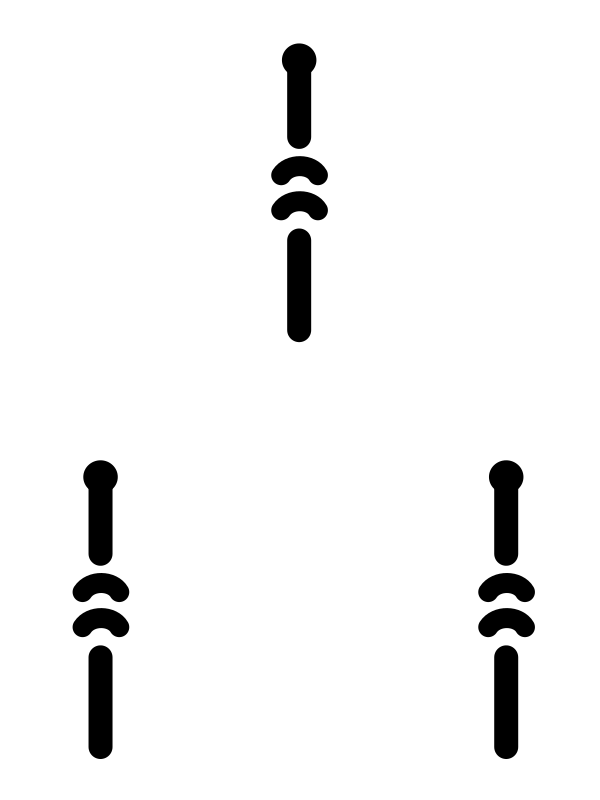
Tanyao (All Simples). This hand is built entirely from the numbers 2 through 8. Because it contains no ones, nines, or honor tiles, it qualifies for tanyao and can be freely opened.


Winning methods
Recall that a hand wins the moment it forms a valid structure with at least one yaku, and that the win is either a tsumo or a ron. The two differ in who pays. A tsumo (self-draw win) is paid by all three opponents together. A ron (discard win) is paid in full by the single player who discarded the winning tile.
The furiten rule
Furiten is a restriction on winning by ron. In its most common form, you cannot win by ron if any tile that could complete your hand is sitting in your own discard pool. While you are in this state, you are restricted to winning only by tsumo.
Controls
Tile selection
Click a tile to discard. In Two Clicks mode (Settings → Match → Discard Mode), the first click selects and the second discards. Click empty space to deselect.
Action buttons
RIICHI / TSUMO / RON / CHI / PON / KAN / SKIP buttons appear at the bottom of the screen when available. SKIP declines the available call (and any ron).
Hover-to-select mode
Optional. Enable in Settings → Match. Hovering over a tile selects it, and clicking discards it immediately. Useful for faster play.
Visual Aids
Yellow triangle
On a hand tile, indicates that discarding it will maintain tenpai.
Blue highlight on table tiles
Tiles in discard ponds or called sets that match your currently selected hand tile. Toggle in Settings → Match → Show Identical.
Red pulse
Indicates dora tiles, both in your hand and on the table.
Compass center
Shows player scores, the current hand, riichi sticks on the table, and tiles remaining in the wall.
Tenpai helper popup
When you select a tile that maintains tenpai, a small panel shows your wait tiles and the count of each that is still available.
Sideways tile in a called set
Indicates which player the called tile came from. Rightmost sideways = next player (shimocha), middle = across (toimen), leftmost = previous player (kamicha).
Match Formats
East-Only
Short match: 4 hands, with a possible South-round extension (enchōsen) if no player has reached 30,000 points by the end of East 4.
Hanchan
Full match: 8 hands, with a possible West-round extension (enchōsen) if no player has reached 30,000 points by the end of South 4.
Daily Wall
Single deterministic challenge: same wall and same opponents for every player worldwide. Resets at UTC midnight.
Online
Host or join multiplayer via 4-character room code.